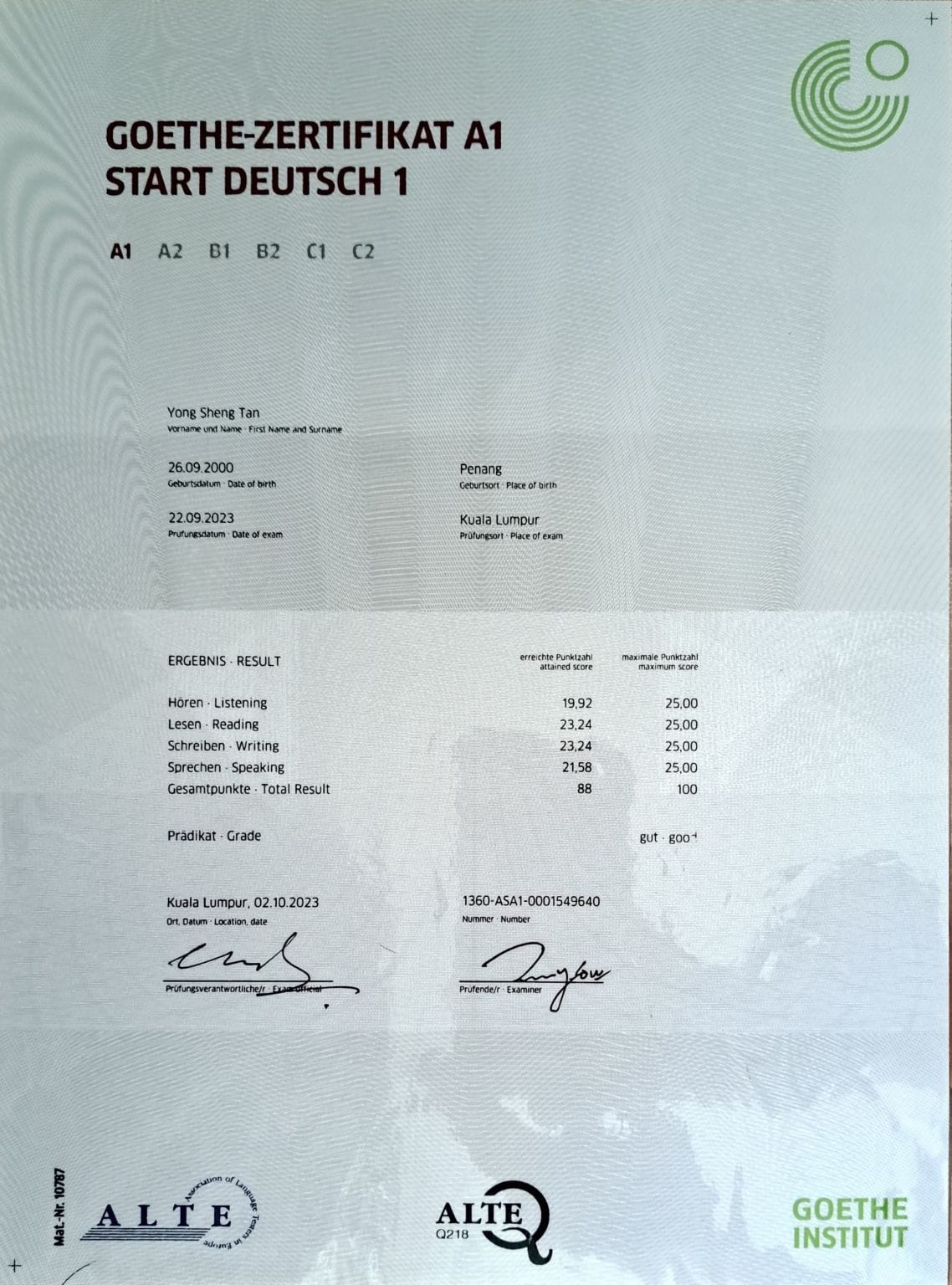
ÖSD Certificate: 11 Thing You're Forgetting To Do
Understanding the ÖSD Certificate: A Comprehensive Guide
In a world that increasingly values multilingualism, acquiring a recognized language certificate can substantially improve your personal and expert chances. Among different certificates offered for German as a foreign language, the ÖSD (Österreichisches Sprachdiplom Deutsch) certificate sticks out. With its focus on standard language skills as described in the Common European Framework of Reference for Languages (CEFR), the ÖSD certificate has ended up being a reputable option for those aiming to verify their German efficiency.
What is the ÖSD Certificate?
The ÖSD certificate is an official certification that certifies the proficiency of non-native speakers in the German language. It is based upon the CEFR structure, which classifies language abilities into 6 levels: A1 (beginner) to C2 (proficient). The ÖSD offers different examinations customized to various proficiency levels, ensuring a wide audience can take advantage of its offerings.
Secret Features of the ÖSD Certificate
Function
Description
Language Focus
German as a Foreign Language
Certification Levels
A1, A2, B1, B2, C1, C2
Validity
Indefinitely (legitimate internationally)
Recognition
Accepted by universities, employers, and governmental bodies
Evaluation Format
Written and oral elements consisting of reading, writing, speaking, and listening
Why Choose the ÖSD Certificate?
Many individuals wonder why they need to pursue the ÖSD certificate over other language certificates. Here are several compelling reasons:
1. International Recognition
The ÖSD certificate is internationally acknowledged, making it an important property for academic and professional pursuits in German-speaking countries and beyond.
2. Comprehensive Skill Assessment
The evaluations focus not just on grammar and vocabulary but likewise on useful communication abilities. ÖSD Zertifikat Verifizieren demonstrate their efficiency through reading, writing, listening, and speaking tasks.
3. Preparation for Higher Education
For students intending to enroll in Austrian universities, the ÖSD certificate is often a requirement. It likewise allows trainees to obtain scholarships or grants that mandate a certain level of German efficiency.
4. Career Advancement
Companies in German-speaking nations value the ÖSD certificate as it assures them of a prospect's language abilities, typically leading to much better job chances and profession development.
5. Cultural Integration
Attaining the ÖSD certificate motivates students to immerse themselves in the language and culture, improving their overall experience in German-speaking environments.
Summary of ÖSD Examination Levels
Each ÖSD examination is created to assess the language abilities suitable for each level. Here is a breakdown:
Level
CEFR Classification
Description
A1
Newbie
Can comprehend and utilize familiar everyday expressions.
A2
Primary
Can communicate in simple tasks requiring an easy and direct exchange of information.
B1
Intermediate
Can deal with the majority of situations most likely to emerge while traveling in a German-speaking area.
B2
Upper Intermediate
Can comprehend the essences of complicated texts and connect with a degree of fluency.
C1
Advanced
Can produce clear, detailed text on complex topics.
C2
Proficient
Can comprehend with ease practically whatever heard or read.
Preparing for the ÖSD Examination
To ensure preparedness for the ÖSD exams, prospects ought to take a systematic technique towards their preparation.
Suggested Preparation Strategies
- Register in Language Courses: Several institutions provide courses specifically designed for the ÖSD exams.
- Utilize Online Resources: Websites, apps, and online courses can help strengthen knowing and supply practice workouts.
- Join Conversation Groups: Practice speaking with native speakers or other learners to enhance fluency.
- Routinely Practice Past Papers: Familiarize yourself with the exam format and question types through previous papers and mock tests.
- Study the CEFR Guidelines: Understanding the requirements of each CEFR level can assist streamline your studying efforts.
Cost and Duration of the ÖSD Certificate
The costs connected with obtaining an ÖSD certificate can differ based on the level and the organization conducting the exam. Typically, costs range from EUR100 to EUR250.
Evaluation periods also differ by level:
Level
Period
A1
Approx. 60 minutes
A2
Approximate. 70 minutes
B1
Approximate. 100 minutes
B2
Approximate. 180 minutes
C1
Approx. 210 minutes
C2
Approx. 240 minutes
Regularly Asked Questions (FAQs)
1. The length of time does it require to prepare for the ÖSD exams?
Preparation time differs depending on your beginning efficiency level, dedication, and the level you prepare to achieve. Usually, students may invest 3 to 6 months preparing for each level.
2. Where can I take the ÖSD exam?
The ÖSD exams are performed in numerous test centers around the world. To discover the nearest place, you can go to the main ÖSD site.
3. How do I receive my certificate?
After taking the exam, candidates receive their results normally within a few weeks. Successful prospects will get their certificate in the post.
4. Is there a limitation to how lots of times I can take the exam?
No, prospects can retake the exam as frequently as they wish up until they attain the desired level of proficiency.
5. Can I use the ÖSD certificate for job applications beyond German-speaking countries?
Yes, many employers outside of German-speaking countries acknowledge the ÖSD certificate as proof of language proficiency, especially in functions that need communication in German.
The ÖSD certificate is an outstanding option for people looking to verify their German language abilities. With its global acknowledgment, detailed assessment strategies, and vast array of levels, it acts as an efficient tool for scholastic and professional development. Whether you are a trainee or a working specialist, making the ÖSD certificate can open doors to brand-new chances while enhancing your understanding of the German language and culture.